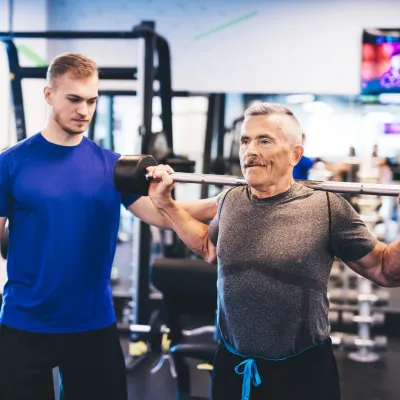
Why At Fitspire Personal Training, We Focus on How You Move, Not What Your Diagnosis Says
Why At Fitspire Personal Training, We Focus on How You Move, Not What Your Diagnosis Says
"I can't do squats – I have arthritis in my knees."
"I can't lift anything overhead – I have a rotator cuff tear."
"I can't do lunges – my doctor said I have degenerative disc disease."
I hear statements like this every single day. And while I absolutely respect your medical team and their expertise, here's what I focus on as your trainer: How does your body actually move today?
Your doctor's diagnosis is important medical information. But as a personal trainer, I approach your fitness from a different angle – one that focuses on what you can do pain-free rather than what a scan or diagnosis suggests you can't do.
Why Movement Assessment Matters in Fitness
As a personal trainer, I work alongside your medical team, not instead of them. Your doctor diagnoses and treats medical conditions – that's their expertise. My role is to help you move better and get stronger within whatever parameters your body allows.
Here's what I've learned from working with clients: a diagnosis tells us what showed up on a test, but movement tells us what your body can actually do today.
Everyone's experience is different. I've worked with clients who have concerning MRI results but move well and feel great. I've also worked with people who have relatively minor findings on scans but experience significant limitations.
Diagnoses can create mental barriers. Sometimes knowing about a structural issue can make us more afraid to move, even when movement might actually help.
My job is to meet you where you are. Rather than focusing on what medical tests show, I want to see how your body actually functions in real movement patterns.
How I Assess What Your Body Can Do
Instead of starting with your medical history, here's what I want to observe:
Can you squat down and stand back up? Even if it's just a few inches, even if you need to hold onto something for support. This shows me your current hip mobility, leg strength, and balance.
Can you step forward into a lunge position? This reveals your stability, coordination, and how comfortable you are with single-leg movements.
Can you bend forward at your hips? This movement pattern is essential for daily activities and tells me about your posterior chain flexibility and strength.
Can you push something away from your chest? Whether it's against a wall or from the floor, this shows me your upper body capabilities.
Can you reach your arms comfortably overhead? This indicates your shoulder mobility and thoracic spine health.
Most importantly: Does any of this cause pain? Not the good discomfort of muscles working, not fatigue from being out of shape, but actual pain that signals we should modify or avoid that movement.
This movement assessment gives me the information I need to design a safe, effective program that works with your body's current abilities.
Using Your Body's Feedback as Our Guide
Here's how we approach exercise when you have medical concerns: we let your body tell us what works and what doesn't.
If overhead pressing causes shoulder discomfort, we don't force it. Instead, we find pressing angles that feel comfortable and start there. Maybe that's at 45 degrees, maybe it's horizontal. We work with your body's current comfort zone.
If squatting to a certain depth causes knee discomfort, we don't avoid squatting entirely. We find the range of motion that feels good and gradually work to improve from there. Maybe we start with sitting and standing from a higher surface.
Pain is your body's way of saying "let's try a different approach" – not necessarily "never do this movement again."
This approach respects both your medical team's guidance and your body's daily reality. We're not ignoring your diagnosis; we're working within it to find what's possible.
The Importance of Supporting Muscles
Here's something that often gets overlooked: the muscles that support your major joints are frequently undertrained in most people.
While your doctor focuses on the injured or problematic area, as a trainer, I look at the whole system. Often, when we strengthen the supporting muscles around a problem area, people experience significant improvement in comfort and function.
For example:
Deep hip stabilizers that help keep your pelvis properly aligned
Rotator cuff muscles that support shoulder blade positioning
Deep core muscles that provide spinal stability
Posterior chain muscles that counteract the effects of prolonged sitting
These smaller, stabilizing muscles don't get much attention, but they play crucial roles in keeping your joints happy and pain-free. When they're weak, the larger muscles have to compensate, which can lead to discomfort and dysfunction.
Strengthening these often-forgotten muscles can make a remarkable difference in how you feel and move.
Building Balanced Strength
Much of the discomfort people experience comes from muscle imbalances. You might be strong in some movement patterns but weak in others. Strong pushing muscles but weak pulling muscles. Dominant on one side but weaker on the other.
Our approach: Build balanced, proportional strength throughout your entire body.
We don't just focus on making your already strong muscles stronger. We identify areas that need attention and work to bring them up to par. We train movement in multiple directions and planes. We ensure both sides of your body can contribute to the work.
The result: Your body often becomes more comfortable and resilient because all the parts are working together more effectively.
This isn't about ignoring your medical diagnosis – it's about working with your body's current capabilities to build the strongest, most balanced version possible.
Real Stories, Real Results
Sarah's "Bad Knees": Came in with diagnosed arthritis, convinced she couldn't squat. Started with sitting and standing from a high box. Six months later, she's squatting below parallel, pain-free. The arthritis is still there on the MRI, but her stronger glutes and stabilizers have taken the stress off her knees.
Mike's "Torn Rotator Cuff": Couldn't lift his arm overhead without shooting pain. Started with wall pushes and gentle reaching exercises. Now he's pressing weights overhead and playing tennis again. The MRI might still show the tear, but his strengthened stabilizers provide the support his shoulder needs.
Linda's "Bad Back": Degenerative disc disease had her afraid to bend over. We started with gentle hip hinges and core stabilization. She's now deadlifting and has less back pain than she's had in years. Her discs haven't magically healed, but her strong core and posterior chain protect her spine.
Why Movement-Based Training Works
This is why we start with observing how you move rather than focusing primarily on diagnoses:
Movement shows us your current reality. Your compensation patterns, areas that need support, and your body's current capabilities. This gives us practical information we can work with.
Movement reveals possibilities. Instead of focusing on limitations, we can see opportunities for improvement and adaptation.
Movement gives us measurable progress. We can track how you feel and function over time, which often matters more than what any scan showed months or years ago.
Movement builds confidence. Every successful, pain-free movement is evidence that your body is more capable than you might have thought.
We're not dismissing your medical team's expertise – we're simply approaching your fitness from the movement and strength perspective, which complements their care.
Your Body is More Resilient Than You Think
Here's what I've learned from working with hundreds of people who came to me with diagnoses, limitations, and fear:
Your body wants to move well. Given the right stimulus and progression, it will adapt and strengthen.
Most "permanent" limitations aren't permanent. They're just current weak points that haven't been properly addressed.
You're not broken. You're just undertrained in some areas and overtrained in others.
Strength solves a lot of problems. When your muscles are strong and balanced, they can support and protect joints, discs, and connective tissues.
What This Approach Means for You
If you've been hesitant to exercise because of a diagnosis, here's what I want you to know:
Your medical diagnosis provides important context, but it doesn't have to define your entire fitness journey. How you actually move and feel day-to-day matters just as much.
Discomfort during movement is valuable information. We use it to guide our exercise selection, not as a reason to avoid all activity.
Every person is unique. What's challenging for one person with a particular diagnosis might be perfectly comfortable for another. We figure out what works specifically for you.
Appropriate strength training often helps people feel better. When done thoughtfully and progressively, it frequently improves comfort and function rather than making things worse.
The goal isn't to ignore your medical concerns – it's to work respectfully within them while discovering what your body can actually do.
Starting Where You Are Today
The goal isn't to pretend your medical concerns don't exist. It's to work respectfully with your body as it is right now and gradually build from there.
Maybe you can't squat to full depth yet. Maybe overhead movements aren't comfortable yet. Maybe you need support for balance during certain exercises.
"Yet" is the key word in those sentences.
We start with what feels good and safe for your body today, and we build gradually from there. Sometimes people are surprised by what becomes possible when we strengthen the supporting structures and work within pain-free ranges of motion.
Ready to explore what your body can do?
At FitSpire Personal Training, we specialize in working with people who have medical concerns or previous injuries. We work collaboratively with your healthcare team's guidance while focusing on safe, progressive movement and strength building.
Our approach is straightforward: assess how you move today, strengthen areas that need support, work within your comfort zones, and gradually build your body's resilience and capabilities.
We're not here to override your medical team's advice – we're here to help you discover what's possible within those parameters.
If you live in the North Raleigh, NC area and would like to see if we can help you, Schedule your movement assessment today and let's see what we can accomplish together
